Round Lab 1025 Dokdo Cleanser Review
Intro
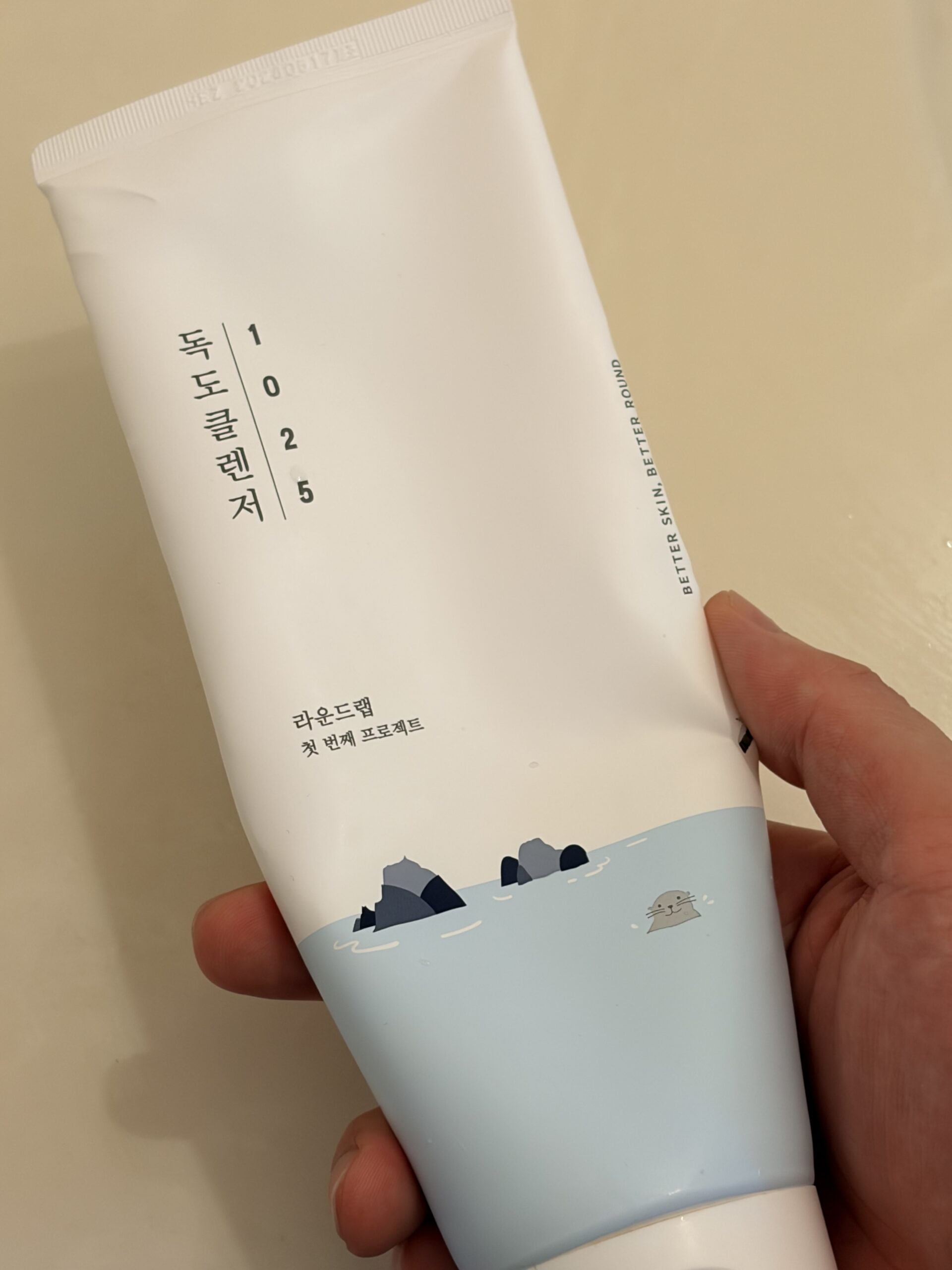
Round Lab 1025 Dokdo Cleanser has been a name that keeps popping up in Korean skincare circles since it launched back in 2017. If you’re reading this, chances are you’ve already seen it mentioned somewhere and you’re seriously considering buying it.
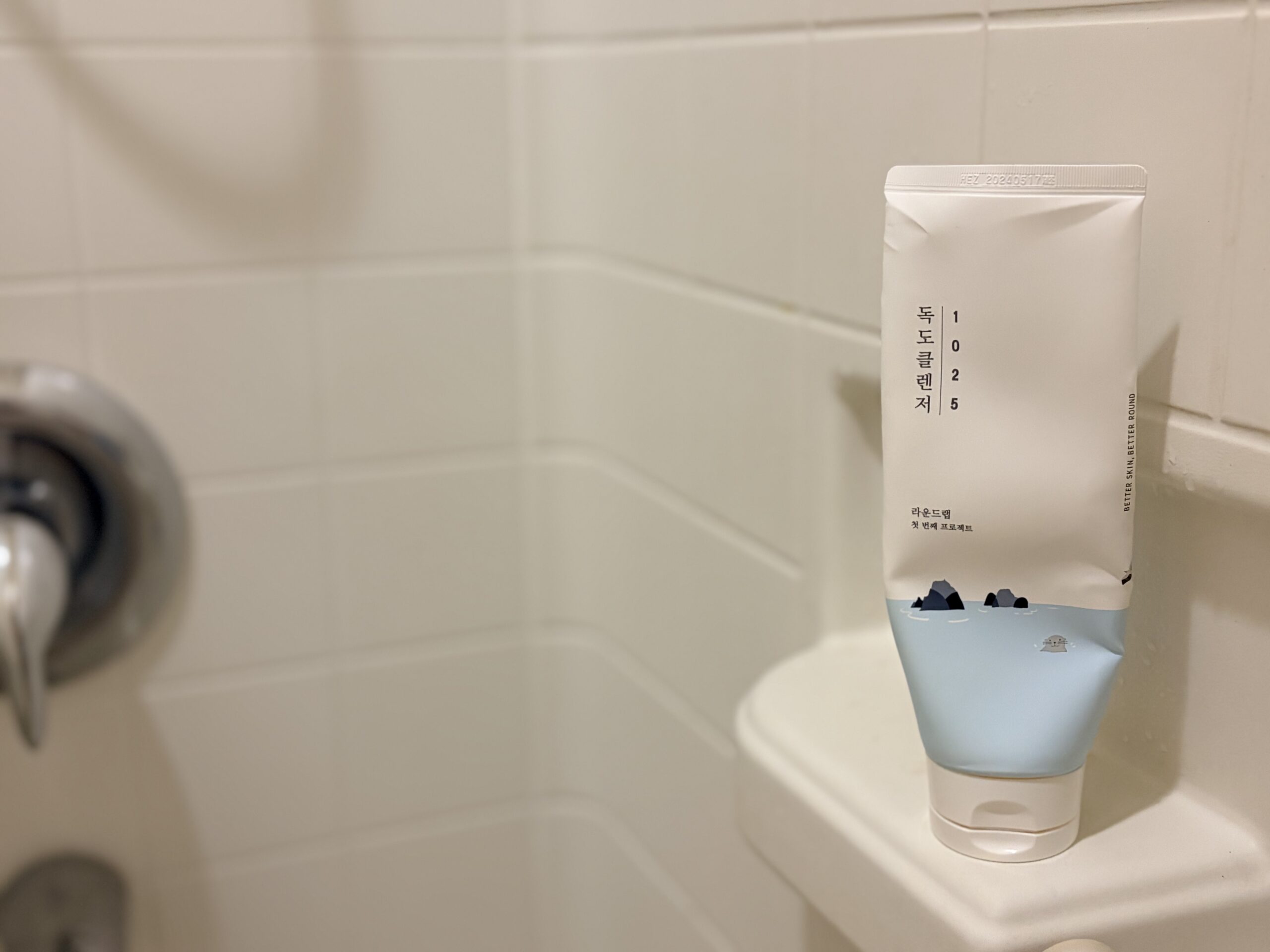
I started using it in 2018, the year after it came out, and I’m still using it almost ten years later. I’ve tried plenty of other cleansers in between, but I always end up coming back to this one because of how well it cleans without ever causing breakouts or irritation. Right now there’s a half-used 250ml bottle sitting in my bathroom, and it’s what I’ll be washing my face with tonight.
This isn’t going to be one of those reviews that just says “it’s gentle, I like it” and calls it a day. I want to actually get into the ingredient science and explain why this thing has kept me hooked for a decade. We’ll look at why the surfactants in this round lab 1025 dokdo cleanser don’t leave your skin feeling tight, and what that actually means if you have oily or combination skin.
TL;DR
Cleansing ingredients: A sulfate-free, amino acid based blend (cocoyl isethionate, cocoyl glycinate, and friends) that cleans well without wrecking your skin barrier. More on this below.
Hydrating ingredients: Ceramides, panthenol, hyaluronic acid, and beta-glucan help keep barrier damage to a minimum right after washing, so there’s barely any tightness afterward.
Ten years of real use: I’ve tried switching to other cleansers plenty of times, but I always come back to this one because it cleans well without causing any trouble.
Pros and cons at a glance: Gentle, effective, and hydrating are the clear strengths. If you need heavy makeup removal though, you’ll want to pair it with an oil cleanser.
Product Basics
| Type | Foam cleanser |
| Size | 40ml, 150ml, 250ml |
| pH | 5.0-6.0 (slightly acidic) |
| Scent | Fragrance-free (you may notice a very faint natural scent from the chamomile oil) |
| Launched | 2017, South Korea |
| Brand concept | Built around Dokdo’s deep sea mineral water |
| Best for | Oily to combination skin, anyone wanting a gentle cleanse |
According to Round Lab, this 1025 dokdo cleanser is designed to clean gently while keeping your skin’s water and oil balance in check. Most foaming cleansers rely on a pH in the 8 to 10 range to get that strong cleansing power, but this one stays slightly acidic instead. That’s worth paying attention to, and I’ll explain exactly why in the next section.
Full Ingredient List
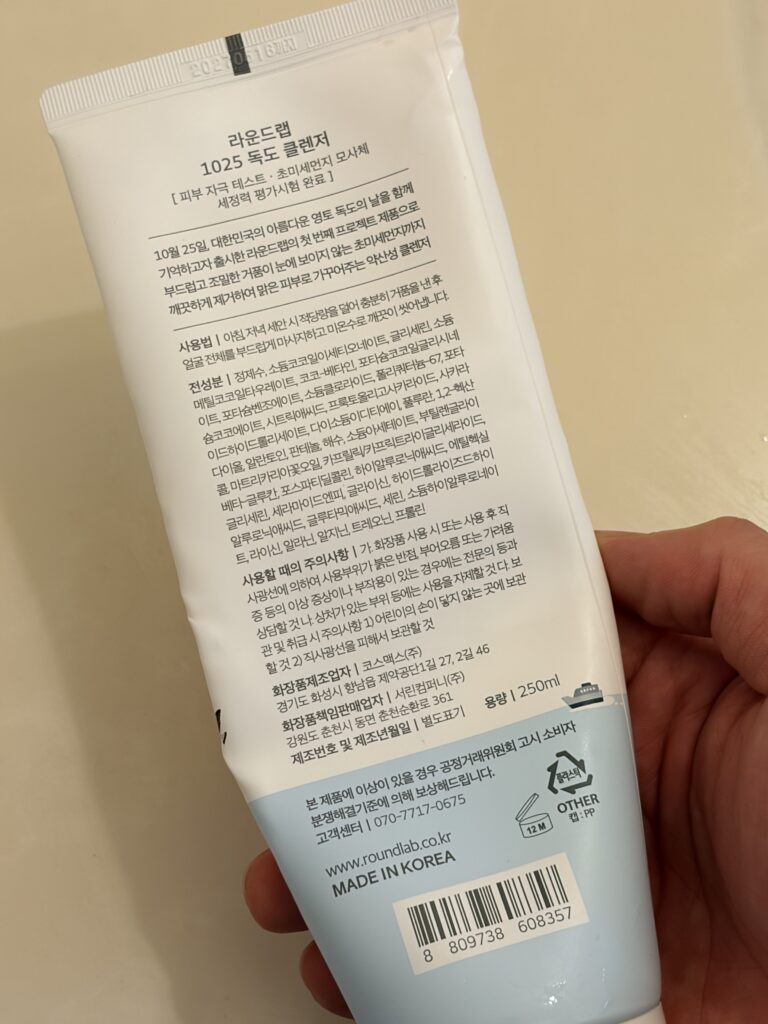
Before we get into the analysis, here’s the complete ingredient list straight off the packaging, so you can see exactly what you’re putting on your face:
Purified Water, Sodium Cocoyl Isethionate, Glycerin, Sodium Methyl Cocoyl Taurate, Coco-Betaine, Potassium Cocoyl Glycinate, Potassium Benzoate, Sodium Chloride, Polyquaternium-67, Potassium Cocoate, Citric Acid, Fructooligosaccharides, Saccharide Hydrolysate, Disodium EDTA, Pullulan, 1,2-Hexanediol, Allantoin, Panthenol, Sea Water, Sodium Acetate, Butylene Glycol, Chamomilla Recutita (Matricaria) Flower Oil, Caprylic/Capric Triglyceride, Beta-Glucan, Phosphatidylcholine, Hyaluronic Acid, Ethylhexylglycerin, Ceramide NP, Glycine, Hydrolyzed Hyaluronic Acid, Glutamic Acid, Serine, Sodium Hyaluronate, Lysine, Alanine, Arginine, Threonine, Proline
I know, that’s a lot to look at, and if you’re new to skincare this kind of list can feel like reading a chemistry exam. Don’t worry about memorizing all of it. Most of these are minor supporting players, stabilizers, or amino acids that round out the formula in small amounts. What actually matters is a handful of key ingredients doing the real work, and that’s exactly what we’re going to break down next.
Key Ingredients Explained
Let’s skip the marketing talk and get into what’s actually doing the heavy lifting in this cleanser, and why it ends up feeling gentle and effective at the same time.
Why it doesn’t leave your skin feeling tight
Most foam cleansers use sulfate surfactants like SLS (sodium lauryl sulfate) to get that strong cleaning power. The problem is these ingredients don’t just strip away oil, they also wash out the essential lipids that make up your skin barrier. That tight feeling right after washing, or oiliness that shows up a few hours later, usually starts here.
The surfactant blend in this cleanser takes a different approach.
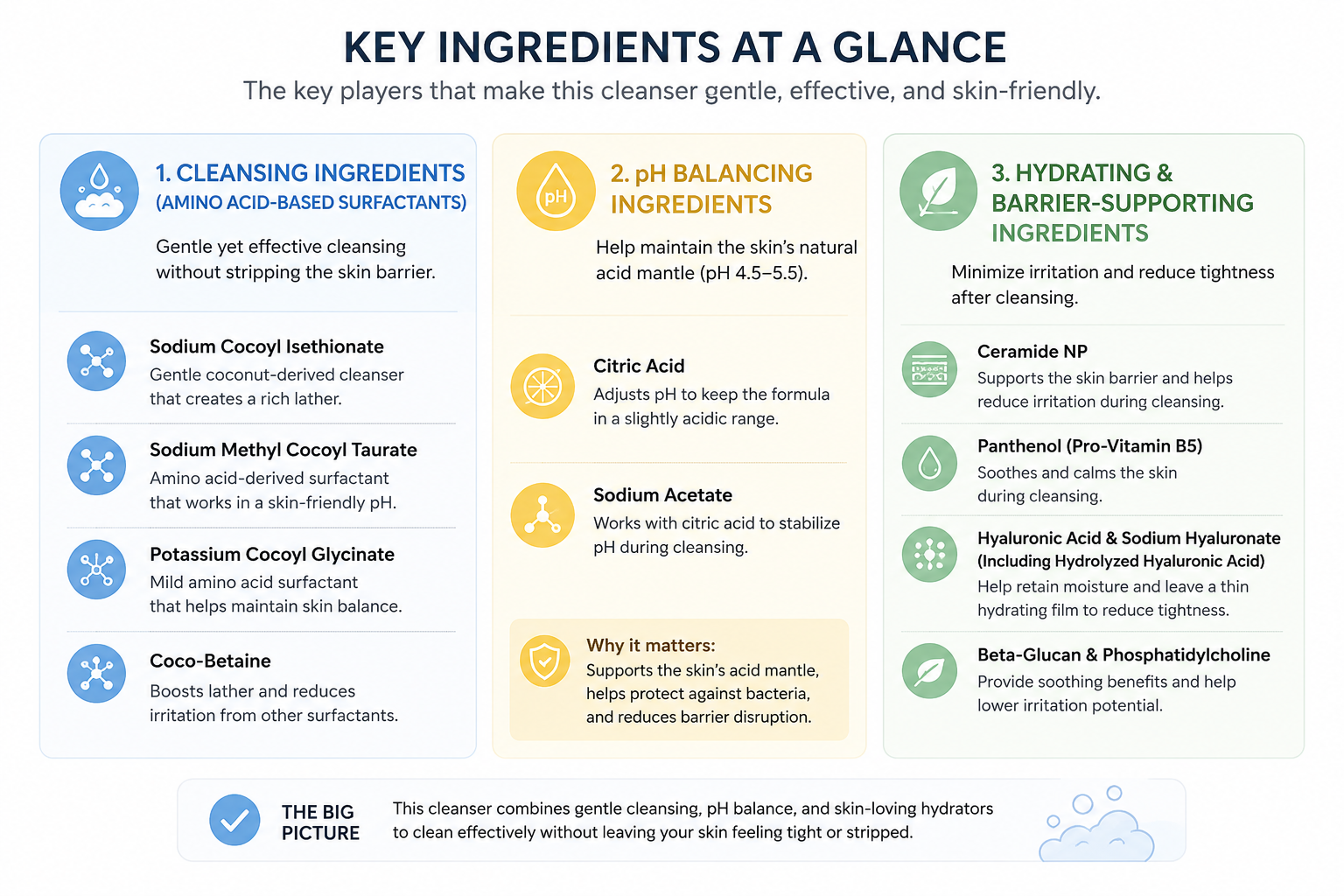
Sodium cocoyl isethionate comes from coconut and is much gentler than sulfates while still producing a rich lather. It’s the same type of ingredient used in well known gentle soap bars like Dove.
Sodium methyl cocoyl taurate and potassium cocoyl glycinate are both amino acid derived surfactants built to work in a slightly acidic environment, close to your skin’s own pH.
Coco-betaine isn’t much of a cleanser on its own, but it works alongside the others to tone down their irritation potential. Combined with the ingredients above, it helps keep the lather stable while staying mild.
What this actually means for you: these ingredients don’t bind strongly to skin proteins because their charge is weak or mildly negative. In simple terms, they wash away dirt and oil without tearing apart your skin barrier in the process. Even if you have oily skin, that doesn’t necessarily mean you need aggressive cleansing. Over-cleansing can actually trigger your skin to produce even more oil, so this kind of ingredient combo makes a lot of sense once you think about it that way.
What the pH actually does
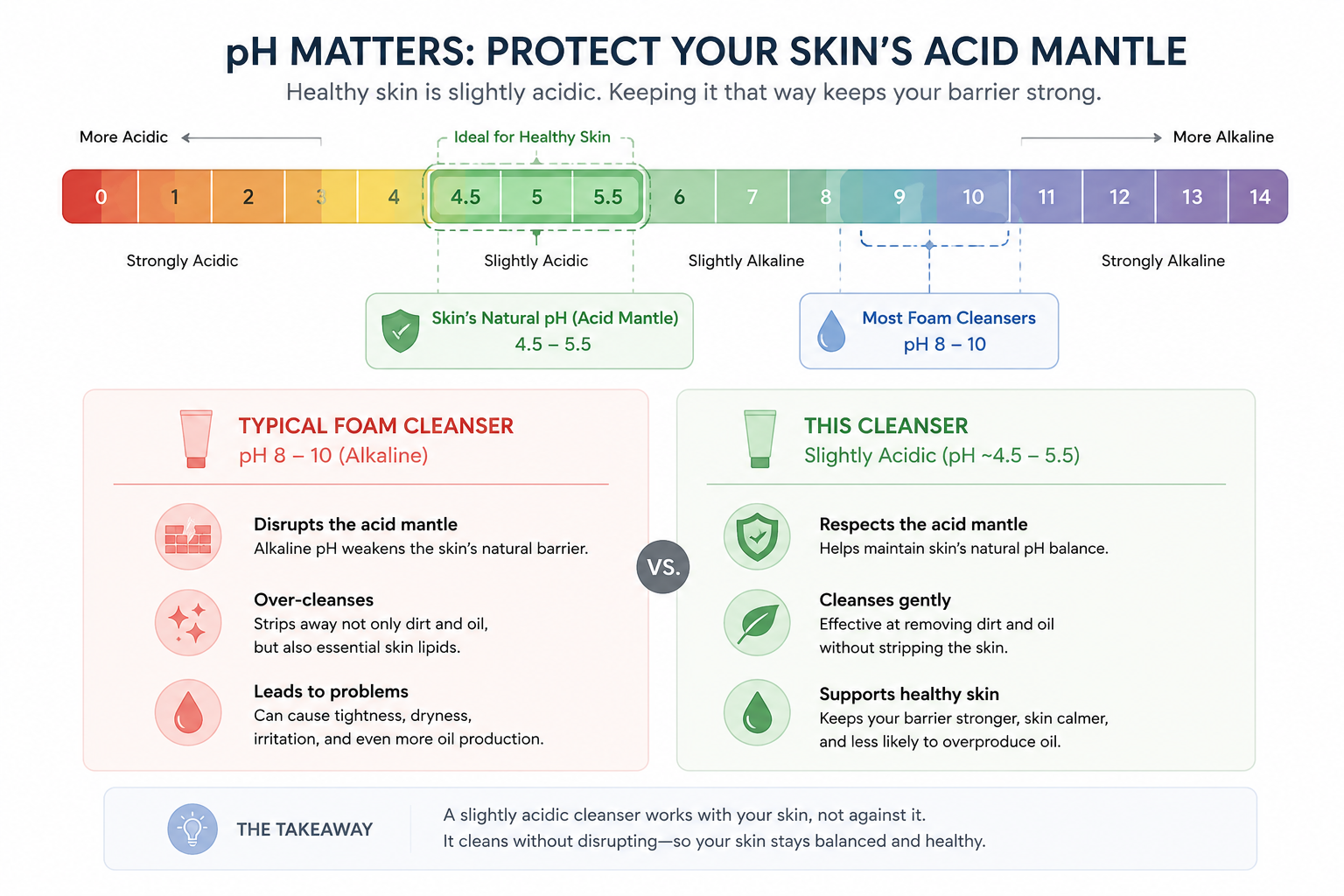
I mentioned earlier that this cleanser is subacid, meaning slightly acidic. Healthy skin normally sits around a pH of 4.5 to 5.5, which is often called the “acid mantle.” This acid mantle keeps bad bacteria in check and helps your skin’s barrier enzymes function properly.
The issue is most foam cleansers are formulated at a pH of 8 to 10 to maximize cleaning power. When your skin’s acid mantle gets disrupted right after an alkaline wash, it can take hours to return to its normal pH, and your barrier function takes a hit during that window.
Citric acid and sodium acetate work as pH adjusters here, and together they keep the formula in that slightly acidic range even while it’s actively cleansing.
Hydrating and barrier-supporting ingredients
Even the gentlest cleanser is still going to strip away some lipids just from the act of washing. That said, there’s something worth clarifying here. A cleanser is a rinse-off product, not a leave-on one. You’re only in contact with it for maybe 30 to 60 seconds, which isn’t really enough time for ingredients to fully absorb and do any dramatic barrier repair. It’s an easy mistake to see ceramides or hyaluronic acid on an ingredient list and assume you’ll get the same hydration you’d get from a leave-on cream. That’s just not how it works.
Still, these ingredients aren’t pointless. Their real job here comes down to two things.
Ceramide NP is a core lipid in your skin barrier. In a cleanser it’s not deeply rebuilding your barrier in such a short contact time, it’s more that it works alongside the surfactants to soften irritation during cleansing.
Panthenol, or pro-vitamin B5, has a calming effect that reduces micro-irritation while you’re washing.
Hyaluronic acid, sodium hyaluronate, and hydrolyzed hyaluronic acid leave behind a thin residual film on your skin, which cuts down on tightness right after rinsing and before you move on to your toner.
Beta-glucan and phosphatidylcholine add a soothing effect and help lower the overall irritation potential of the formula.
What this actually means for you: these ingredients aren’t repairing your barrier while you cleanse, they’re making the cleansing process itself less harsh and reducing tightness so you’re in better shape heading into the rest of your routine. The real barrier repair comes later, from your toner or moisturizer, the leave-on products. Think of this cleanser’s job as “doing less damage” rather than “fixing damage,” and that’s a more accurate way to look at it.
How this connects to men’s skin specifically
Men’s skin tends to have a thicker outer layer and more active oil glands compared to women’s skin on average. That leads a lot of guys to assume they need a stronger cleanser, but in reality, over-cleansing can trigger your oil glands to overcompensate and produce even more oil.
Given men’s skin tends to run oilier with a thicker outer layer, the combo of amino acid surfactants, slightly acidic pH, and ceramides plus panthenol in this cleanser seems well suited to strike that balance: cleaning thoroughly without provoking your skin into overproducing oil.
My Experience After Ten Years
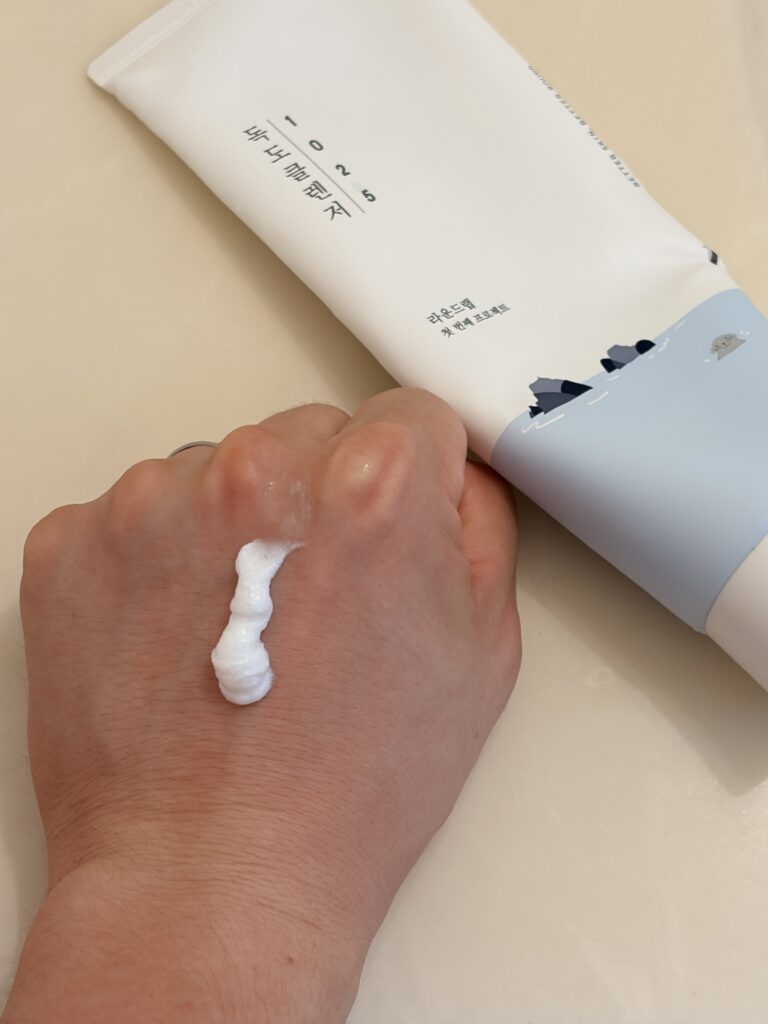
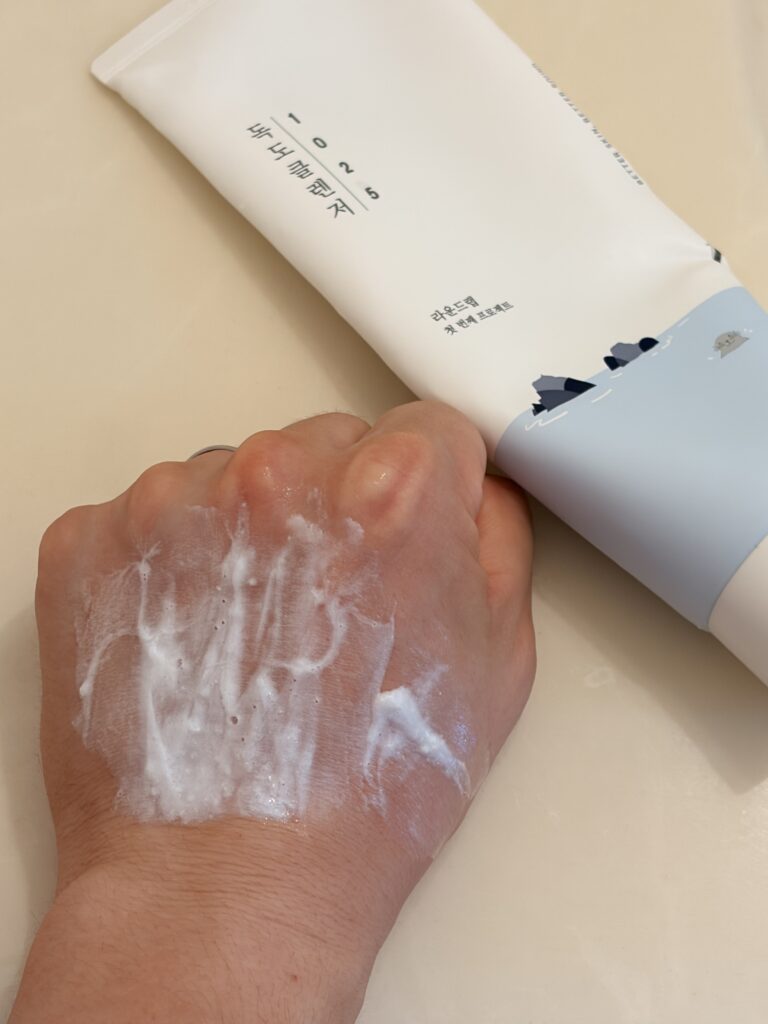
The first thing I noticed using this cleanser, and it’s stuck with me the whole time, is how my skin feels right after rinsing. No tight, stretched feeling once I towel off. That’s not just a vague “it feels gentle” impression, it’s basically the amino acid surfactants and slightly acidic pH doing exactly what the ingredient science says they should.
No irritation either. No itchiness, redness, or excessive flaking, not once in ten years. My skin isn’t especially sensitive to begin with, but when I think back to other cleansers I’ve tried, I did occasionally notice mild stinging or tightness afterward. This one has consistently been a non-issue, even during seasonal changes or right after shaving when skin tends to be more reactive.
Cleansing power hasn’t been a letdown either. Even on days I’ve been outside all day or sweating a lot, my face feels properly clean afterward, not just superficially rinsed. As I mentioned in the ingredient breakdown, this cleanser doesn’t sacrifice cleaning power just because the surfactants are gentle, and that’s something you can actually feel using it day to day.
Over ten years I’ve tried plenty of other cleansers, switching back and forth more than once. But I always end up back here, because finding something that’s both genuinely effective and genuinely gentle turned out to be harder than I expected.
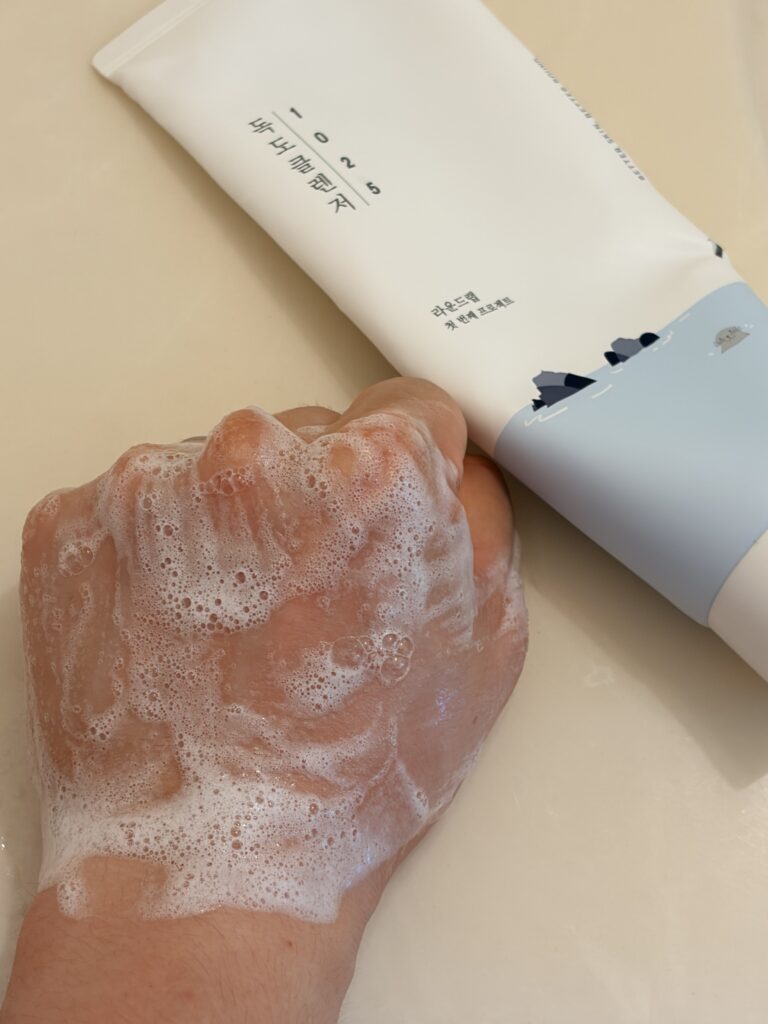
Pros and Cons
| Pros | Cons |
|---|---|
| Amino acid based surfactants are gentler than sulfate cleansers | Not enough on its own for sunscreen or makeup removal. You’ll want to pair it with an oil cleanser for double cleansing |
| Slightly acidic pH minimizes damage to your skin’s acid mantle | Costs more than twice as much per ounce as something like CeraVe’s foam cleanser, which is common with Korean skincare compared to US drugstore brands |
| Ceramides and panthenol calm irritation during washing |
Who Should (and Shouldn’t) Try This
Good fit if you have:
- Oily or combination skin, since the amino acid surfactants clean away oil without over-stripping your skin and triggering more oil production.
- A history of post-wash tightness, since the slightly acidic pH and gentle surfactants avoid the dryness that alkaline cleansers tend to cause.
- Sensitive skin after shaving, since the panthenol and beta-glucan help calm things down right when you need it.
- A preference for fragrance-free products.
- A want for something gentle that still actually cleans well, since a lot of mild cleansers compromise too much on cleaning power, and this one balances both pretty well.
Might want to look elsewhere if:
- You wear sunscreen or makeup daily, since this cleanser alone probably won’t fully remove it and you’ll need an oil cleanser as a first step. If you’re hoping for a one-step wash, this might disappoint.
- Budget is your top priority, since it runs over twice the price per ounce of drugstore options like CeraVe.
- You have very dry skin, where a cream cleanser or a gentle oil cleanser might suit you better than a foam formula.
Bottom Line
After trying other cleansers over and over for ten years and always coming back to this one, I think the ingredient breakdown and my actual experience both point to the same conclusion. If you’ve been looking for a cleanser that’s both effective and genuinely gentle, this one is worth trying at least once.
Related Reading
If this review was helpful, you might also want to check out the full routine this cleanser fits into. Washing your face is just step one, and if you’re curious what comes next and in what order, check out Skincare Routine for Men: A Complete Guide (2026) for the full breakdown from start to finish.
Affiliate Disclosure
This post contains affiliate links. If you purchase through one of these links, I may earn a small commission at no extra cost to you. All opinions here are based on my own personal experience and ingredient research.